Before you go: what I got wrong before I even picked up the camera
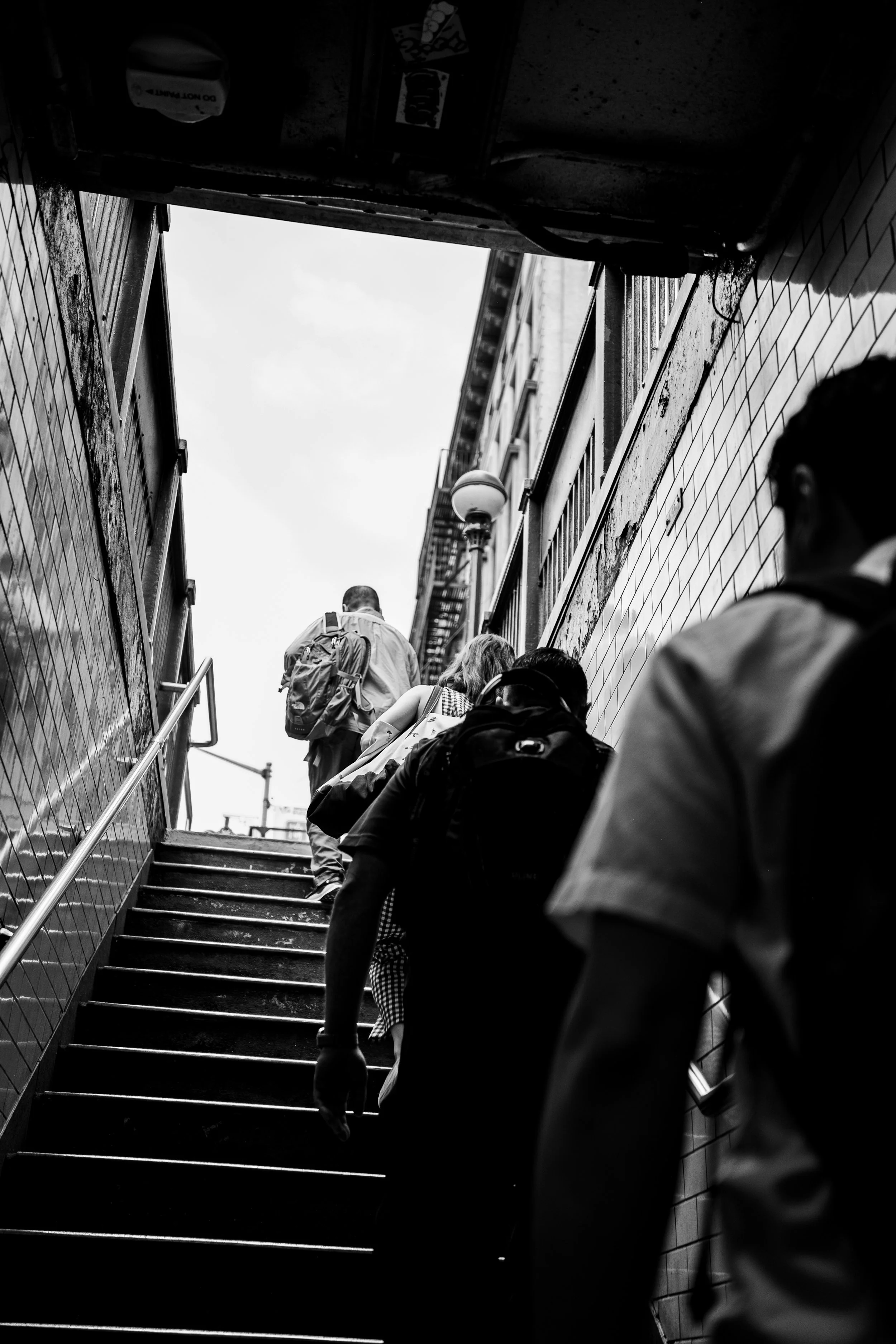
Coming up from Canal Street into Chinatown. A couple of blocks away from the Manhattan Bridge.
I have been thinking a lot about the hour before I walked onto the Manhattan Bridge.
I had my camera. I had a rough idea of where I wanted to shoot. I knew my uncle was somewhere in the city, and we were going to meet for lunch later. That was about the extent of my planning.
Nobody knew exactly where I was going. My phone was charged, but I had not thought about what I would do if I needed help quickly. I had not looked at the bridge path layout ahead of time. I just showed up, the way I always do, and started shooting.
That is the way I shoot street photography. I go somewhere and see what happens. The spontaneity is the point, at least for me. I know photographers who plan everything out, scout locations in advance, and know exactly what they are looking for before they arrive. That is just not how I shoot. The problem is that my approach, which had always worked fine for photography, did not account for the fact that some locations carry more risk than others. And I had not thought about that at all.
What I think about now, before going out, is different.
Tell someone where you are going
Not a general area. A specific location. If I were heading to the Manhattan Bridge pedestrian path, I would want someone to know that: the bridge, the pedestrian side, roughly what time I planned to be there, and when to expect to hear from me.
That morning, my wife knew I was in New York. She did not know I was on the bridge. When I needed help, the people who found me were strangers. That worked out. It does not always.
Know the layout before you arrive
I did not know the pedestrian path on the Manhattan Bridge had that cove-like section past the arch on the right side. I found it by walking there, and it looked like a good spot. It was a good spot for a photo. It was also a spot where nobody could see me.
Looking at a location on Street View or satellite before you go is not over-preparation. It takes five minutes. You get a sense of where the path goes, where the open areas are, and where the isolated sections are. You can make better decisions once you are there.
Think about your phone before you need it
Charged battery. Emergency contacts are easy to access. Location sharing is only available if you have someone to share it with.
I got up after the attack and walked toward the Manhattan side of the bridge, looking for help. I had my phone. That mattered. But there were a few seconds where I was not sure I would be able to use it. I think about that now.
Carry less than you think you need
I was carrying a camera and not much else. That part was fine. But I have thought about what I was wearing, what was visible, what signals I was sending about what I had on me.
Street photography gear does not have to be invisible. But thinking about how much attention you draw to yourself, in a given location, at a given time of day, is worth a few seconds of consideration.
Know when to leave
This one is harder because it is about judgment in the moment, not about preparation beforehand. But I think preparation helps here too. If you have already thought about what an uncomfortable situation looks like, you are faster to recognize one when it is happening.
I noticed something was off when the person approached me on the bridge. I have written about that in the previous post. What I did not have was a clear internal permission to act on that feeling. I defaulted to brushing it off because that is what I had always done with street friction. I had not thought about what it would mean for that to be different.
I think about it now.
A note to close
None of this is meant to make street photography feel dangerous. Most days out there are uneventful. Most people you encounter are just people moving through the same space you are. I shot in Philadelphia, New York, and European cities for nearly two years without anything like what happened on the bridge.
But I also hadn’t thought about any of this before that morning. And I think that was a mistake.
The photography is worth protecting. So is the person taking it
.