Strangers who showed up: a tribute to the joggers, bystanders, NYPD, and NYFD EMTs
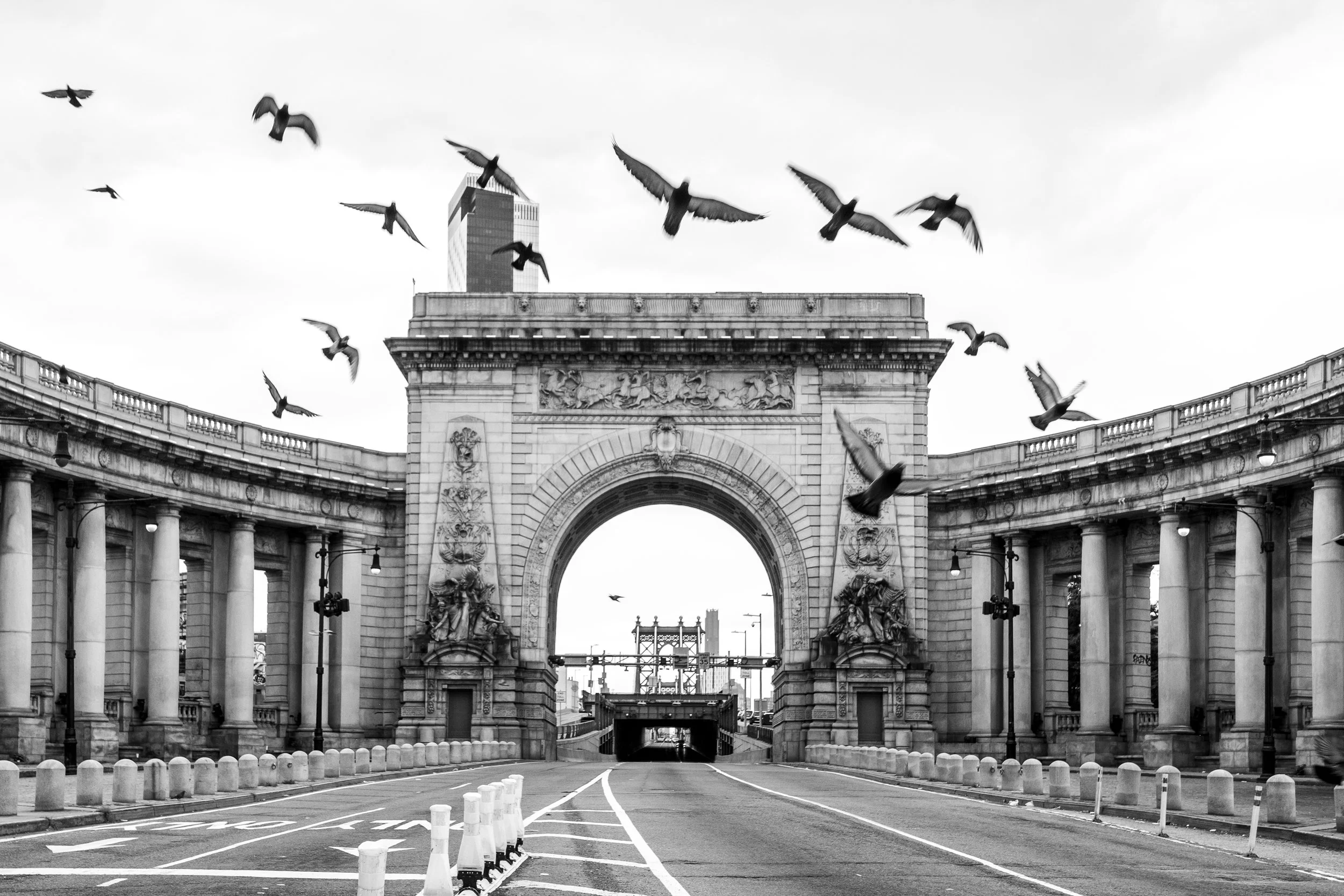
Manhattan Bridge. Where strangers became heroes.
The ones who didn’t have to stop
After that, on Friday morning, on the Manhattan Bridge, I went home and looked something up. It is called the bystander effect. When an emergency unfolds, the more people who witness it, the less likely anyone is to help. The responsibility seems to dissolve into the air. Everyone assumes someone else will step in. In those crowded moments, people blur into a faceless tide, and you can feel utterly alone.
I had never heard of it before. But I had felt it.
When I stood up after the attack, bleeding from my head, and started yelling for help, people kept moving. Joggers passed. Walkers passed. The bridge kept doing what bridges do, carrying people from one place to another without stopping. In that moment, I felt the bystander effect in real time. Not as a concept from a psychology textbook. As something is happening to me.
And then it broke.
The young woman who stopped
I had to make it happen. I stepped in front of a young woman who was jogging toward me and asked for help. She had every reason to keep running. She was in the middle of her workout. I was a stranger. I was bleeding. I was shaken and probably did not make complete sense.
She had a look on her face I won’t forget. Shocked. Surprised. But she listened.
She stopped. She called 911. She stayed.
After she got off the phone, I introduced myself and asked for her name. She told me. I am keeping it here out of respect for her privacy. But I know her name, and I think about her with gratitude every time that morning comes to mind. She was the first person who chose to stop on that bridge, and that choice mattered more than she will ever know. When you are standing alone and bleeding in a city you don’t live in, a city where you are a stranger, having one person stop and say I am here changes everything. It changes the air around you. It changes what feels possible.
She did that.
The jogger who knew where we were
A few minutes later, another jogger stopped. He didn’t just stop to look. He stopped to help. When the 911 dispatcher called back and needed our precise location, I had nothing to give them. We were on a bridge. No street signs, no mile markers, nothing specific enough to pinpoint where we were.
I asked him. He knew. We were standing above the FDR Drive.
At least we knew where we were. The dispatcher later asked if I could walk to the end of the bridge to meet the EMTs. Knowing our position on the bridge made that easier. He gave us that.
The jogger with the phone
Then came the moment that I think about most when I replay that morning.
A young man came jogging toward us with something to say. He had pulled out his phone and captured photos and video of a man matching the attacker’s description. The attacker's back was clearly visible in the frame. And so was the orange backpack.
The orange backpack I had forgotten to mention to the 911 dispatcher. The one detail that would turn out to matter most.
I looked at his photos. That’s him, I told him. That’s the guy.
I don’t know what made him do it. I don’t know if he heard me yelling, or saw something suspicious, or just had the instinct to document what he was seeing. But he did it. I don’t know if he ever provided those photos to the police. But if they were ever needed, we had them. A description. A visual. An orange backpack.
The attacker was detained and later arrested. That jogger’s photos and video may have played a part in that.
What these three people have in common
None of them knew me. None of them had any obligation to stop. None of them were trained for what they walked into that morning. They were just people on a bridge on a Friday, doing their thing, when something happened that gave them a choice.
They chose to show up.
That is nothing. In a city of eight million people, in a world where it is easy to look away and easier still to justify it, these three people did not look away. They did not decide it was not their problem. They stopped, they stayed, and they helped a stranger get through one of the worst mornings of his life.
I think about them more than they probably think about that day.
The NYPD
Two uniformed NYPD officers, one male and one female, were near the ambulance. The male officer approached me. He was calm and professional. He told me they had detained a suspect and asked if I could make an identification.
They had him. Surrounded by officers, down on one knee, handcuffed. His orange backpack was on the ground beside him.
The response was fast. The arrest was swift. For someone who had never dealt with police in a situation like this before, I did not know what to expect. What I got was efficiency and professionalism. They did their job, and they did it well.
I am grateful for that.
The NYFD EMTs
The EMTs met us at the end of the bridge. Calm, focused, and thorough. They assessed my injuries quickly and treated me with care. They poured hydrogen peroxide over my scraped knees. It burned and stung, and I watched it bubble up. They put me in a wheelchair and moved me toward the ambulance.
In the middle of everything that had just happened, their steadiness was its own kind of comfort. They were not rattled. They were not rushed in a way that felt careless. They were simply there, doing what they are trained to do, and doing it well.
First responders show up for strangers every single day. Most of the time, nobody writes about it. I am writing about it.
The nurse who cleaned my face
I want to include one more person in this tribute. She was not on the bridge. She was not a first responder in the traditional sense. She was a nurse in the emergency room, maybe in her early sixties, who walked into my room and saw a man with a blood-covered face and blood dried down his legs.
Without a word, she brought a large towel, wet it, and started cleaning my face. Then my arms. She was gentle and quiet and unhurried. She did not make me feel like a case. She made me feel like a person. Like a mother tending to her own son.
She had a sarcastic sense of humor that caught me off guard in the best way. The kind of dry wit that only someone who has seen everything in an ER for decades can pull off. It cut through the weight of the morning in a way I needed without even knowing I needed it.
And then when she handed me my discharge papers, she offered me some juice. Just like that. As a matter of fact. The way a mother would make sure her child had something to drink before sending him back out into the world.
I smiled at that. I still do when I think about it.
That is its own kind of heroism.
To everyone who stopped that morning
I never got most of your names. I may never know who you are. But I know what you did, and I know what it meant.
You broke the bystander effect. You chose the harder thing. You stopped when stopping was not required of you, when the easier and more understandable choice was to keep moving and let someone else handle it.
There is no way to fully repay that. So I am doing the only thing I know how to do. I am writing it down. I am telling anyone who will read this what you did and why it mattered.
Thank you. From the bottom of my heart. Thank you.
Next in this series: Situation awareness for street photographers. Lessons I learned the hard way on the Manhattan Bridge and what I wish I had known before I got there.
Follow my street photography on Instagram: @28mmbw
Read more and view my full portfolio at 28mmbw.com
Won
